Dette systemet er ikke lenger i aktivt bruk og har blitt erstattet av Panopto i løpet av sommeren 2023. Les mer her.
| Dato | Tittel | Foreleser | Emne | |
|---|---|---|---|---|
 |
29. november 2013 Kl. 12.05 70 min K102 |
NISlecture 2013/09 | Ulf Feger | NISlecture |
 |
31. januar 2014 Kl. 12.05 70 min K105 |
NISlecture 2014/01 | Storm Jarl Landaasen | NISlecture |
 |
28. mars 2014 Kl. 12.05 60 min K105 |
NISlecture 2014/03 (28.03.2014, 12.15-13.00 in K105 and live online) The Birth of the Pointer Variable A powerful but potentially dangerous programming language facility! Harold “Bud” Lawson, Inventor of the Pointer Variable Concept and Recipient of the prestigious IEEE Charles Babbage Computer Pioneer Award Harold “Bud” Lawson has been a leading pioneer in the computing and systems arenas. In this seminar he will share some of the significant highlights from the early part of his career that led to the introduction of the pointer variable concept in programming languages. His experiences and reflections have recently been published in a chapter of the book Reflections on the History of Computing: Preserving Memories and Sharing Stories (IFIP Advances in Information and Communication Technology). Bud Lawson’s professional career began in 1959 under the leadership of the legendary Real Admiral Dr. Grace Murray Hopper at Remington Rand Univac in Philadelphia. During his long career he participated in several pioneering developments in software, hardware and computer based systems. For his invention of the pointer variable concept in programming languages he was awarded the prestigious IEEE Charles Babbage Computer Pioneer award in 2000. |
Harold “Bud” Lawson | NISLecture |
 |
29. august 2014 Kl. 12.05 65 min K102 |
NISlecture - Threats and Security in the Cyber World | Martti Lehto | NISlecture |
 |
26. september 2014 Kl. 12.05 70 min K102 |
Privacy is 80% Information Security, - How to manage privacy in your organization | Hans Dahlquist | NISlecture |
 |
31. oktober 2014 Kl. 12.05 65 min K102 |
How we discovered Heartbleed | Tomi Väisänen | NISlecture |
 |
28. november 2014 Kl. 12.05 65 min K102 |
Nasjonalt ID senter | Arne Tveitan | NISlecture |
 |
30. januar 2015 Kl. 12.05 65 min K102 |
NISlecture 2015/1 | Zeno Geradts | NISlecture |
 |
27. februar 2015 Kl. 12.05 65 min K102 |
NISlecture 2015/2 | Sylvia Yang | NISlecture |
 |
27. mars 2015 Kl. 12.05 80 min K102 |
NISlecture 2015/3 | Lars Bo Langsted and Søren Sandfeld Jakobsen | NISlecture |
 |
24. februar 2017 Kl. 12.10 50 min K105 |
Security aspects of smartphones authentication Abstract: The industry introduced username and passwords more than 40 years ago and has subsequently seen incremental improvements to maintain an adequate security posture. Complexity rules, password change frequency, and requirements to avoid password re-use were added over time to improve the security of username+password infrastructure. Since then, (a) the average number of accounts has increased to a level that it is unfeasible for users to memorize distinct passwords per account and (b) mobile devices without physical keyboards are proliferating. Typing in passwords on such devices is cumbersome and prone to error. On the other hand, new attacks have appeared that demonstrate the fundamental security limitations of the existing password concept. Several variations of one-time-password schemes have been invented to fix the password security problem (e.g. one-time passcode (OTP) tokens, SMS OTP, OTP generator Apps). Unfortunately, such schemes further reduced usability and did not succeed in protecting against scalable attacks (e.g. Phishing, MITM). Biometric user verification, initially used for Government purposes, can be more convenient for users than typing passwords. We will look into the security aspects of the unattended nature of mobile biometrics and the implications for a secure implementation of secure and biometrics-based authentication. Rolf Lindemann works for Nok Nok Labs, Inc. as Senior Director Products & Technology and brings more than 15 years of experience in product management, R&D and operations from the IT security industry. He has contributed to various FIDO specifications and has been a frequent speaker at industry events. Prior to Nok Nok Labs Rolf Lindemann worked as Senior Director Product Management in the user authentication group at Symantec where he was responsible for research and product strategy on device authentication in smart grids and mobile networks. Before Symantec's acquisition of TC TrustCenter, he was Executive Director Product Strategy at TC TrustCenter GmbH. Named to that position in 2009 he was responsible for analyzing market trends and aligning the overall product portfolio to new market opportunities. Rolf Lindemann received his PhD from the Technical University in Hamburg-Harburg and holds a master's degree in electrical engineering. |
Rolf Lindemann | NISlecture |
 |
31. mars 2017 Kl. 12.12 55 min K105 |
Software Certification for Software-intensive Safety Critical Systems Smart devices are all around us nowadays. These little angels/devils are making our lives much easier, while also opening up a lot of security/safety holes, esp. those safety critical devices have the potential of physically harming or even killing us. In this NIS lecture, in order to demonstrate the real threats of these devices, I will use a case study of a software intensive medical device ‹ the Insulin Pump ‹ from one of our previous projects at the McMaster Centre for Software Certification, McMaster University, Canada. Based on the insulin pump example, I will give an overview and discuss some important aspects of the key approach to make these systems safer and more secure: software certification. |
Hao Wang | NISlecture |
 |
26. mai 2017 Kl. 12.12 55 min K105 |
The Modern Cybersecurity Stack: Data-driven Network Monitoring with Bro Faced with today's sophisticated cyberattacks, classic intrusion detection systems often leave defenders with playing games of whack-a-mole. Offering an alternative, the open-source network security monitor Bro has become a driver behind a recent paradigm shift inside the incident response community: By facilitating data-driven, site-specific network traffic analyses, Bro empowers operators to defend their organizations against a broad range of attacks, from indiscriminate to highly targeted. This talk will recap Bro's evolution from a niche software developed by a small academic research group into a widely deployed system that's now protecting some of the world's largest organizations. We will examine Bro's scientific foundation, discuss experiences transitioning the system from a research platform to large-scale operational deployment, and present current research efforts that seek to further advance today's network defense capabilities. |
Robin Sommer | NISlecture |
 |
25. august 2017 Kl. 12.12 55 min K105 |
Our Cyber Security Challenges: A Serious Game Do you have the “right stuff” to play the cyber security game? If not how can you get it? In this NISlecture we will outline some extracurricular activities you can participate in as a student to learn and challenge your skills and knowledge of cyber security. Associate Professor Simon McCallum will introduce the Community of Professors (COPS) Doctoral program on Serious Games and Cyber Security. He will also talk about the need for tools (Qrate) and skills for all students, be they bachelor, master or doctoral students, to learn how to ask “the right” critical questions to security cyber space. PostDoc Gaute Wangen will present his experience as a doctoral student and a member of the Norwegian Digital Border Squad in the 2017 Cyber 9/12 Challenge, held annually in Geneva. Further information about the Norwegian Cyber Security Challenge 2017 www.ntnu.no/ncsc will be presented. Professor Stig Frode Mjølsnes will present student extracurricular activities in IIK Trondheim-Campus via Skype. He will present the activities of the ITEMIZe Hacker Club. The ITEMIZE Hacker Club started up in October 2014 by Prof. Mjølsnes. An important goal of ITEMIZE is to actively participate and achieve respectable rankings in the multitude of international hacker contests. These typically take place over two-three days, most often on the weekends, which produce motivation, experience, and new skills. The, ITEMIZE members meet bi-weekly in some available afternoon, to share and discuss solutions to challenges and puzzles in earlier competitions, new exciting hacker stuff, hearsay, tool tutorials, and more. http://itemize.no/contact/ So all students should sign up to attend this NISlecture either in person or online to learn about some serious challenges in your future. |
Simon McCallum, Gaute Wangen and Stig Frode Mjølsnes | NISlecture |
 |
29. september 2017 Kl. 12.12 55 min K105 |
Implementing European Cybersecurity Regulation In summer 2016, the EU adopted its directive on the security of network and information systems (NIS directive). EU member states must transpose the directive into their national law by May 2018. The core provisions of the directive put pressure on European companies: Operators of critical infrastructures must implement cybersecurity requirements and report cyber attacks. Moreover, the directive covers major digital services. Online marketplaces, search engines and cloud services must fulfil similar requirements. Germany has been at the forefront of implementing the NIS directive. Even before the directive was passed by the European Parliament, Germany has adopted the first IT security law, which is close to the European provisions, and sets up cybersecurity requirements for critical infrastructures and digital services. However, NIS directive and its national implementations are just a part of the evolving cyber regulation in Europe. Sectorial regulation is spreading, too. Martin Schallbruch performs an analysis of the problems and opportunities of the regulatory rush in European cybersecurity. Martin Schallbruch is a Senior Researcher for Cyber Innovation and Cyber Regulation at the European School of Management and Technology, Berlin. For more than 10 years, he was a director-general in the German federal government, responsible for digital strategy and cybersecurity. |
Martin Schallbruch | NISlecture |
 |
8. mai 2015 Kl. 12.05 65 min K102 |
NISlecture 2015/4 | Dr. Dhiren R. Patel | NISlecture |
 |
29. mai 2015 Kl. 11.05 65 min K102 |
NISlecture 2015/5 | Luigi Lo Iacono | NISlecture |
 |
28. august 2015 Kl. 12.05 70 min K102 |
NISlecture: Digital Sovereignty Core aspects of Digital Sovereignty will be governance of ICT and the new technologies and paradigms mainly mobile technologies and cloud computing. At the same time, these aspects are the hardest security challenges. The intersect of these areas will be the major drivers when it comes to the lead or even domination in the field of ICT over the next decade. With this digital sovereignty and international agreements, e.g. TTIP will play a decisive role in this game. Europe seems to have given in with the global division where America focusses on large and industrial software and systems where Asia has taken the lead with hardware as labor and environment conditions are not reflected in the products. Europe being one of the largest markets is still struggling with its position in this game. Consumer’s needs and security as well as data protection and trusted information security might be areas where Europe has fair chances but at the end it will be about governance. While overarching and global some of the key factors of such governance will be factored into important detail aspects and new ICT paradigms like mobile and cloud computing and might even take dominant roles. |
Prof. Dr. Reinhard Posch | NISlecture |
 |
25. september 2015 Kl. 12.15 45 min K102 |
NISlecture Telenor Group from a Security Perspective |
André Årnes | NISlecture |
 |
27. november 2015 Kl. 12.00 60 min K102 |
Timing Attacks against State Estimation in Power Networks | Stephen Wolthusen | NISlecture |
 |
11. desember 2015 Kl. 12.00 60 min K102 |
The Norwegian Internet Voting Experiment | Kristian Gjøsteen | NISlecture |
 |
29. januar 2016 Kl. 12.15 45 min K102 |
NISlecture 2016/1 Our digital society and pervasive vulnerabilities | Sofie Nystrøm | NISlecture |
 |
26. februar 2016 Kl. 12.05 60 min K102 |
NISlecture 2016/02 Unpatchable: Living with a vulnerable implanted device NISlecture 2016/2 Unpatchable: Living with a vulnerable implanted device |
Marie Elisabeth Gaup Moe | NISlecture |
 |
1. april 2016 Kl. 12.05 60 min K102 |
NISlecture2016/3: Quantification of Cyber Risk Accumulation - one of the biggest challenges for insurers | Dr. Maya Bundt | NISlecture |
 |
27. mai 2016 Kl. 12.05 60 min K102 |
NISlecture 2016/5 :Some ethical dilemmas of hacking NISlecture 2016/5 :Some ethical dilemmas of hacking |
May Thorseth | NISlecture |
 |
30. september 2016 Kl. 12.10 50 min K102 |
Computer security at CERN: risks, vulnerabilities, threats, incidents etc. - trends and lessons learnt In this lecture, Sebastian will present the computer security risk landscape of an international research laboratory, overview various motivations behind attacks, and explain how these threats are addressed at CERN. He will then go into details of several types of vulnerabilities, and incidents affecting CERN in the past - and will discuss lessons learnt. The lecture will conclude with a summary of possible future trends, and ways of responding to them. |
Sebastian Lopienski | NISlecture |
 |
25. november 2016 Kl. 12.10 60 min K102 |
Kan vi håndtere cybertrusselen? (Can we handle the cyber threat?) In this lecture, Arne will review status for cyber security in 2016 and postulate about the future landscape ahead. Arne Helme received a Cand. Scient degree for research on distributed operating systems at the University of Tromsø in 1992 and a Doctorate degree in security engineering from the technical University of Twente, The Netherlands, in 1997. For the past 20 years he has helped public and private organization in Europe to improve their security capabilities – particularly in the area of electronic ID and national security infrastructures. He is currently Partner and Cyber Security Lead at KPMG Norway. |
Arne Helme | NISlecture |
 |
16. desember 2016 Kl. 08.25 50 min K102 |
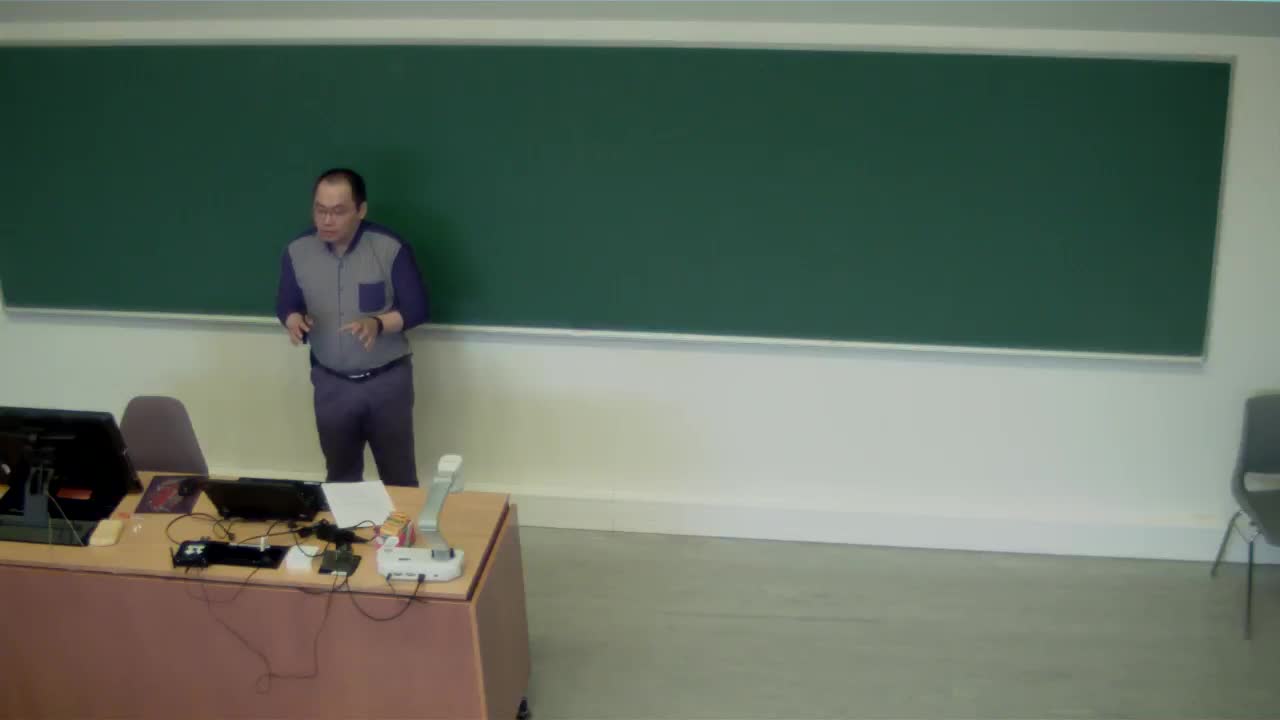
Confidentiality, Privacy and Information security Abstract: How to handle privacy and information aspects we learn about other people in our jobs – «the thin line» between more security and privacy. About the lecturer: Ms. Solveig Fiske, Bishop in the Church of Norway, the Diocese of Hamar. Born in 1952. Ordained pastor in January 1982. Consecrated bishop December 2006. Worked several years as chaplain and vicar in local parishes. Former leader of Norwegian association of female theologians. Member of the Norwegian delegation at the Pastoral Conference of Great Lakes in Africa in 2003 and 2004. Representing the Church of Norway’s Bishops conference in the Coordination council on abuse issues. Representative in the board of the Practical-Theological Seminar at the University of Oslo. Leader of the board of The Church’s Resource Centre against violence and sexual abuse. Part of the campaign-board for the national Stop violence against women campaign. |
Bishop Solveig Fiske | NISlecture |
 |
19. mai 2017 Kl. 12.12 55 min K105 |
A novel Binarization Scheme for Real-valued Biometric Feature Biometric binarization is the feature-type transformation that converts a specific feature representation into a binary representation. It is a fundamental issue to transform the real-valued feature vectors to the binary vectors in biometric template protection schemes. The transformed binary vectors should be high for both discriminability and privacy protection when they are employed as the input data for biometric cryptosystems. We present a novel binarization scheme based on random projection and random Support Vector Machine (SVM) to further enhance the security and privacy of biometric binary vectors. The proposed scheme can generate a binary vector of any given length as an ideal input for biometric cryptosystems. In addition, the proposed scheme is independent of the biometric feature data distribution. Several comparative experiments are conducted on multiple biometric databases to show the feasibility and efficiency of the proposed scheme. |
Jialiang Peng | NISseminar |
 |
15. september 2017 Kl. 12.12 55 min A146 |
Big Data Analytics: Topic Modeling for Digital Forensics Investigations and Cyber Threat Intelligence “Big Data Analytics” has become a high priority topic in Cyber Research and in the field of Cyber Security, Big Data represents a very serious problem. In the domain of Digital Forensics Investigations (DFI), the sheer volume of data to be analyzed impedes police operations that require timely reporting of DFI results to support active criminal investigations in the field. In the domain of Cyber Threat Intelligence (CTI), a rapid assessment of the available threat data is required to enable dissemination of actionable intelligence in a timely manner. Topic Modeling is an unsupervised machine learning method for analyzing large bodies of text data and producing estimates of the topics under discussion in them. To gain some insight into how it works, we reviewed some of the underlying principles of Topic Modeling. Then, I presented experimental results that show how Topic Modeling would work in the specific domains of DFI (using the Enron data set) and CTI (using posts scraped from an online hacker forum). |
Carl Stuart Leichter | NISseminar |